
![IMIDAZO[1,2-A]PYRIDINE-6-CARBOXYLIC ACID](https://chem-iso.com/wp-content/uploads/2024/12/139022-25-6.gif)
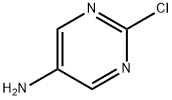
5-Amino-2-chloropyrimidine: Technical Guide & Industry Insights
Table of Contents
- Product Overview & Specifications
- Key Applications & Use Cases
- Industry Case Studies
- Procurement Guidance
- Request Custom Quotes
Product Specifications & Comparative Analysis
| Parameter | 5-Amino-2-chloropyrimidine | Similar Compounds |
|---|---|---|
| CAS Number | 17228-65-4 | N/A |
| Molecular Formula | C4H4ClN3 | Varies by derivative |
| Purity Grade | Pharmaceutical (≥99%) | Industrial (95-98%) |
| Storage Conditions | 2-8°C in inert atmosphere | Room temperature |
Industrial Applications & Functional Chemistry
Pharmaceutical Intermediates: Critical building block for HIV protease inhibitors and kinase-targeted oncology drugs. Enables selective functionalization at the 4-position through nucleophilic aromatic substitution.
Agrochemical Synthesis: Key precursor for neonicotinoid insecticides with improved hydrolytic stability compared to 2-amino derivatives.
Material Science: Used in coordination chemistry to create luminescent metal-organic frameworks (MOFs) with nitrogen-rich coordination sites.
Documented Use Cases
Case Study 1: Antiviral Drug Development (PharmaTech Solutions)
Challenge: Required scale-up from lab (50g) to pilot plant (20kg) while maintaining ≤0.5% dimeric impurities.
Solution: Optimized Buchwald-Hartwig coupling conditions using BrettPhos precatalyst (0.5 mol%) at 80°C in dioxane/water biphasic system.
Outcome: Achieved 92% yield with 99.7% HPLC purity, reducing API production costs by 18%.
Case Study 2: Next-Gen Insecticides (AgroChem Solutions)
Challenge: Develop photostable insecticide formulation resistant to UV degradation.
Solution: Synthesized chloropyrimidine-neonicotinoid hybrid through radical trifluoromethylation at 4-position.
Outcome: Field trials showed 40% longer residual activity compared to imidacloprid benchmarks.
Technical Procurement Considerations
Critical Quality Parameters:
– Residual solvent levels (DMF < 500ppm)
– Heavy metal content (Pd < 10ppm)
– Particle size distribution (D90 < 50µm for consistent reactions)
Supply Chain Best Practices:
1. Request batch-specific 13C NMR spectra for ring substitution verification
2. Validate thermal stability through DSC analysis (decomposition onset >150°C)
3. Conduct accelerated stability studies (40°C/75% RH for 6 months)
Request Technical Documentation
For COA samples, bulk pricing (100kg+ quantities), or custom synthesis requirements:
Email: info@vivalr.com
Tel: (86) 15866781826
Our chemical engineering team provides:
– Regulatory support (REACH, FDA DMF filings)
– Process optimization consulting
– Custom halogenation services
相关产品

Chemical Name: Choline salicylate
CAS No.: 2016-36-6
Molecular Formula: C12H19NO4
Molecular Weight: 241.28
Appearance: Red-Brown Crystal
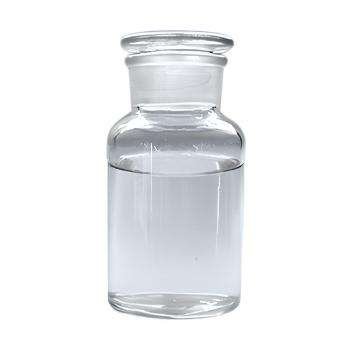
Chemical Name: D-PANTOTHENIC ACID
CAS No.: 79-83-4
Molecular Formula: C9H17NO5
Molecular Weight: 219.24
Appearance: Colorless or Light Yellow Oily Liquid

Chemical Name: 1-[9-ethyl-6-(4-fluoro-benzoyl)-9H-carbazol-3-yl]-ethanone
Cas No.: 876907-97-0
Molecular Fomula: C23H18FNO2
Molecular Weight: 359.39
Chemical Name: N-(3-Aminopropyl)morpholine
CAS No.: 123-00-2
Molecular Formula: C7H16N2O
Molecular Weight: 144.21
Appearance: Colorless transparent liquid

Common English name: 5-iodo-2,3-dihydropyridazin-3-one
CAS No.: 825633-94-1
Molecular formula: C4H3IN2O
Molecular weight: 221.98
Sample: Available
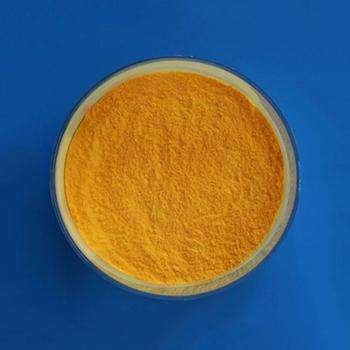
Chemical Name: Isoflavone
Synonyms: Soy Isoflavone; Soybean Lsoflavones; 3-Phenylchromen-4-one; 3-Phenylchromone
CAS No.: 574-12-9
Molecular Formula: C15H10O2
Molecular Weight: 222.24
Appearance: Powder
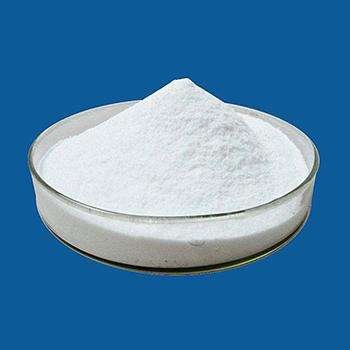
Chemical Name: 1,5-Diphenylcarbazide
Synonyms: 1,5-Diphenylcarbohydrazide; 2,2’-diphenylcarbazide; Diphenylcartazide; sym-diphenylcarbazide
CAS No.: 140-22-7
Molecular Formula: C13H14N4O
Molecular Weight: 242.28
Chemical Name: Di-n-amyl disulfide
Cas No.: 112-51-6
Molecular Fomula: C10H22S2
Molecular Weight: 206.41
Chemical Name: Marbofloxacin
CAS No.: 115550-35-1
Molecular Formula: C17H19FN4O4
Molecular Weight: 362.36
Appearance: Red-Brown Crystal
Chemical Name: Tribehenin
Cas No.: 18641-57-1
Molecular Fomula: C69H134O6
Molecular Weight: 1059.8
Appearance: White waxy powder or solid
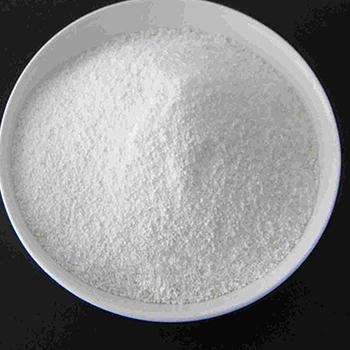
Chemical Name: Dehydrocholic acid
Synonyms: Acide dehydrocholique; Triketocholanic acid
CAS No.: 81-23-2
Molecular Formula: C24H34O5
Molecular Weight: 402.53
Appearance: Powder
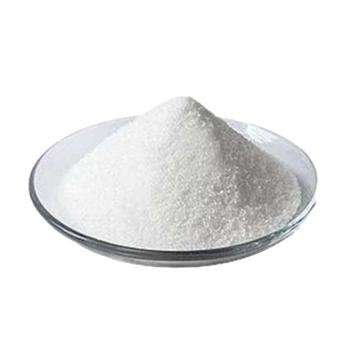
Chemical Name: 3-Hydroxybutyric acid
CAS No.: 625-71-8
Molecular Formula: C4H8O3
Molecular Weight: 104.1
Appearance: White powder



评论
目前还没有评论。